Gifting has never been easier
Perfect if you're short on time or are unable to deliver your gift yourself. Enter your message and select when to send it.
So, you've got some beautiful roses and you wish they could last forever? I totally get it! Preserved roses aren't just pretty, they can be meaningful keepsakes or beautiful home décor. Today, I'm gonna walk you through exactly how to preserve roses at home the right way, sharing practical tips and avoiding rookie mistakes (trust me, I've been there!).
Here's exactly what we'll cover:
If you've never heard of preserved roses, you're about to fall in love! These aren’t just dried flowers. Preserved roses keep their fresh, vibrant appearance and softness for years. Here's why they're so awesome:
Unlike artificial flowers, preserved roses are natural roses treated with safe ingredients. And bonus: no pollen means no sneezing!
They stay looking brand-new for 3 years, sometimes even up to a decade.
Forget watering or special care. Seriously, they're perfect for anyone with a busy schedule (or just lazy, like me!).
You can even create shades nature never imagined—think blue, silver, or even rainbow roses.
Sure, there are traditional ways to dry roses, but they're not the same as preserving them. Let me save you from some pain
Easy but roses crack and lose their vibrant colors fast within a week later, they start looking sad.
Quick but often uneven and can damage delicate petals.
Effective but risky. I learned this the hard way when I accidentally spilled silica gel on my hand, my skin dried out terribly (yes, ouch!). Even with the slightest skin contact with the silica gel, it can cause serious irritation.
Here's a quick table to sum up why traditional methods aren’t great:
|
Method |
Durability |
Color Retention |
Safety Risks |
|
Air Drying |
Low |
Poor |
None |
|
Microwave Pressing |
Moderate |
Moderate |
Burns (petal damage) |
|
Silica Gel |
Moderate |
Good |
Skin irritation risk |
In summary:
Air drying = wilted.
Microwave pressing = scorched.
Silica gel = cracked & skin-irritating. (Ask me how I ended up with flaking fingers after skipping gloves.)
You’re not drying flowers for a scrapbook here. If you want preserved roses that stay vibrant, you need the real technique which involves a secret weapon called AB solution.
Preserving roses perfectly means following a very specific method involving two chemical solutions, known as solutions A and B. Here's exactly how you do it correctly:
Sure, there are traditional ways to dry roses, but they're not the same as preserving them. Let me save you from some pain
Pour Solution A into an airtight container, ensuring enough liquid to fully submerge your roses.
Place your fresh roses carefully into Solution A.
Leave the roses submerged until they fully lose their natural color (typically a day or so, depending on the flower).
Once roses are fully decolorized, immediately remove them from Solution A and place them into Solution B. Dyes are added into Solution B in this step in order to get your desired color.
Let them soak for about 36 hours (a day and a half), so the PEG fully penetrates, giving your roses their soft, natural feel.
So, you've got a preserved rose and you're thinking, "Can I make this beauty blue? Or maybe even rainbow?" Absolutely! Changing the color of preserved roses is not only possible but also a fun way to customize your floral decor. Let's dive into the various methods to achieve this.
|
Method |
Description |
Best For |
|
Physical color retention |
Uses environmental controls like low oxygen, low humidity, and light-blocking to retain the natural pigments. |
Keeping original flower color |
|
Chemical dyeing |
Introduces dyes during the preservation process to enhance or fully change the flower's color. |
Creating vibrant or unnatural colors like blue, purple, black |
|
Artistic color tinting |
Involves painting, spraying, or brushing dyes on petals after preservation. |
Adding accents, gradients, or glitter finishes |
Before we get into the how-to, it's essential to understand that preserved roses are real roses that have undergone a preservation process to maintain their natural beauty and softness. This process typically involves replacing the natural sap and color with a glycerin-based solution, allowing the rose to retain its fresh appearance for months or even years.
For the best results, start with light-colored preserved roses, such as white or cream. These colors act as a blank canvas, allowing dyes to show up more vividly. Darker roses can be dyed, but the final color may be a blend of the original and the dye, leading to unexpected results.
If you’re not running a flower lab like me (just kidding), you can still get creative with coloring preserved roses at home — but stick to post-preservation methods like:
Just don’t try to soak store-bought preserved roses in water-based dye again — they’ll fall apart. Once a rose is preserved, its internal water structure is locked in. Think of it like adding makeup to a model: you can enhance, but not redo the foundation.
This method involves submerging the rose into a dye solution.
Materials Needed: Fabric dye or floral dye, Warm water, Gloves, Container for dye
Note: Dip dyeing can produce vibrant colors, but be cautious as prolonged submersion can damage the petals.
Spray dyes are specially formulated for flowers and provide an even color application.
Materials Needed: Floral spray dye (e.g., Design Master), Protective covering for workspace, and Gloves.
Note: Spray dyeing offers more control and is less invasive than dip dyeing.
Materials Needed: 1. Food coloring; 2. Water; 3. Knife
Note: This method is not effective for preserved roses as their stems no longer absorb water.
To achieve a gradient look:
For a multicolored rose:
Note: This method is best suited for fresh roses.
Chemicals react directly with rose pigments, preserving or altering their original hues:
Common chemicals for color preservation include:
Adding glitter can elevate your preserved roses, making them stand out with a unique sparkle. Follow these easy steps:
Choose a spacious workspace where glitter spills can be easily cleaned.Pour glitter powder into a resealable Ziploc bag.
Wearing gloves, carefully apply glue to the edges or tops of petals. Petals are delicate—apply glue gently and sparingly to avoid damage.
Dip the glued petals gently into the glitter-filled bag. Shake gently and softly rotate roses to evenly coat petals with glitter.
Allow roses to air dry undisturbed for at least 30 minutes. Avoid touching the glittery areas until completely dry.
These simple touches will create stunning, customized preserved roses that can brighten up any space!
The irony? They’re low maintenance, not no maintenance.
Here’s what to keep in mind:
|
Do |
Don't |
|
Keep away from direct sunlight |
Avoid spraying water or mist |
|
Store in a dry place |
Don’t press or squeeze the petals |
|
Gently dust with a soft brush |
Avoid humid bathrooms or kitchens |
|
Use display boxes or domes |
Don’t keep near heat sources |
Basically, if it’s good for a nice book or piece of art, it’s good for your rose.
Here’s where my practical side kicks in. Preserved roses aren't just for gifting to your special someone.
Home decor: Put them in glass domes, shadow boxes, or minimalist vases
Event centerpieces: No wilting during long events
Retail window displays — Florists use them all the time
Keepsakes — Wedding bouquet, baby shower, funeral flowers
Crafts & jewelry — Resin art, hair accessories, bookmarks
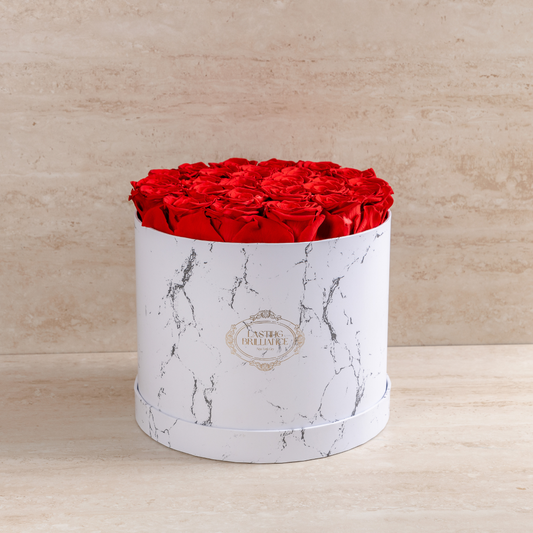
Want a ready-made stunner? Our 16 Roses in Black Box is basically the forever bouquet you’ll never stop admiring.
Preserving a rose is more than a cute craft — it’s a way to hold onto a memory without letting it wilt. Whether you're making your own or buying premium designs like Lasting Brilliance’s 16-Rose Box, it’s 100% worth it when done right.
Just skip the microwave. Please.
Want help finding the best preserved roses for gifting or décor? Explore our full collection at www.lastingbrilliance.com.
Typically, they last between 3 to 5 years. Advanced methods can keep them fresh-looking up to a decade!
Definitely! Just follow the AB solutions method I mentioned above, and remember to wear protective gear.
Nope! They're non-toxic, hypoallergenic, and safe for homes with allergies or pets.
Zero maintenance needed—no watering, no sunlight, no hassle!
Mostly yes, but roses and hydrangeas preserve especially well. Softer petals hold treatments better than stiff, woody flowers.
Gifting has never been easier
Perfect if you're short on time or are unable to deliver your gift yourself. Enter your message and select when to send it.